When most people first feel the pull toward healing, they instinctively look upward and outward — toward spirituality, toward transcendence, toward something larger than their individual identity. They want to connect with nature, with the universe, with God or Source, with ancestors, with the invisible forces that shape their lives. This is what we call the transpersonal realm: the dimension of experience that moves beyond the ego into the collective, the spiritual, the ancestral, the archetypal.
This realm is powerful. It can infuse life with meaning, widen our sense of belonging, and open doors to insight that the rational mind can’t reach. Practices like ancestral healing, generational trauma work, shamanic journeying, deep meditation, or psychedelic exploration often live here. And these paths matter.
But something I see again and again is that people try to start their healing here — and in the process, they skip the personal.
The Personal: The Soil of Your Being
The personal realm is everything to do with you:
- your body
- your nervous system
- your attachment patterns
- the beliefs you hold about yourself
- the trauma imprints you carry
- the parts of you that say “I’m not good enough,” “I’m not loved,” “I’m not safe,” or “I don’t belong.”
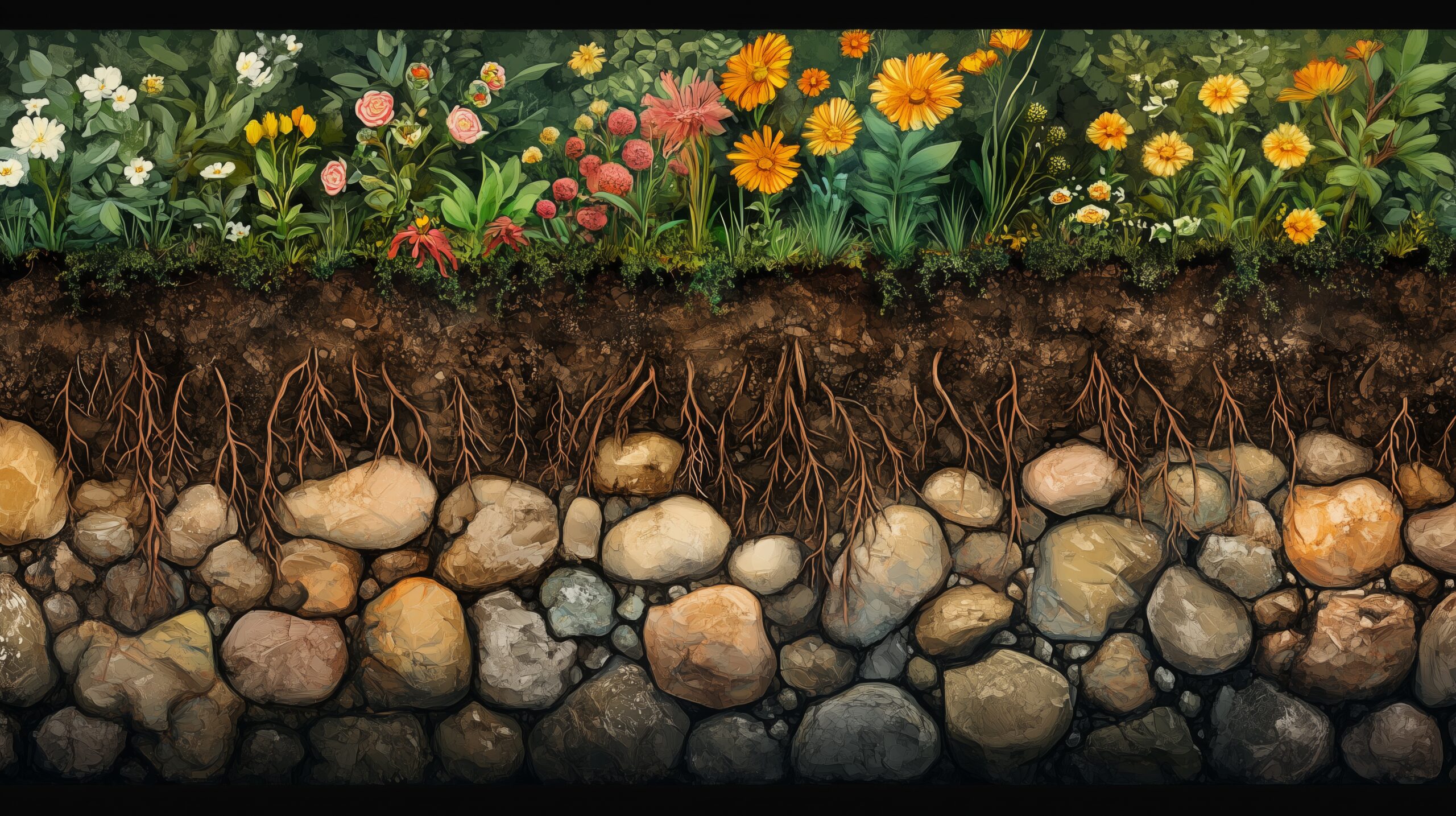
This is the groundwork. This is the soil.
If transpersonal healing is the flower, then personal healing is the earth it grows from. You can tend to the flower forever — watering it, trimming it, trying to keep it alive — but if the soil is depleted, compacted, or diseased, that flower will always struggle. It might open for a moment, but it won’t thrive. And it certainly won’t give rise to a whole garden.
When the personal soil is healthy, something remarkable happens:
not only can one flower bloom — many can. A whole forest becomes possible.
Why People Skip the Personal
Part of this is cultural. Spirituality is more glamorous. Transcendence sounds more exciting than emotional repair. It feels bigger, more meaningful, more heroic.
But there’s another reason: the personal realm is often where the pain lives.
Facing your attachment wounds, your shame, your unmet childhood needs, your relational patterns — this is intimate terrain. It’s raw. And unlike mystical states or spiritual visions, which can feel expansive, personal healing often asks you to feel things you’ve spent your whole life avoiding.
And yet, without it, the transpersonal can only take you so far.
How the Personal and Transpersonal Work Together
In my own work, I’m deeply interested in the intersection of these two dimensions. They’re not separate realms; they’re two layers of the same psyche.
Ideal Parent Figures (IPF), Internal Family Systems (IFS), and somatic work often begin in the personal — repairing the attachment system, reorganizing inner parts, resolving trauma patterns in the body.
But when the personal foundation becomes strong enough, something else naturally begins to open.
I’ve seen this with many clients. After enough attachment repair, their Ideal Parent Figures begin to feel less like imagined parents and more like conduits of a higher source of love — something archetypal, ancestral, or spiritual.
Sometimes this connection evolves into powerful transpersonal experiences: connecting with animal guides, receiving support from ancestors, tapping into past-life imagery, or touching states of consciousness that feel universal.
This is why I feel that Ideal Parent Figures function very similarly to spirit guides, but specifically designed for attachment repair. Indigenous shamanic traditions often recognize guides appearing as parents, elders, animals, or ancestors. IPF fits right inside that lineage — not as a mystical practice, but as a psychologically precise one.
And the fascinating thing is: once the personal system feels safe, open, and regulated, clients are far more capable of navigating those transpersonal states without bypassing, dissociating, or getting lost in the symbolic realm.
Personal healing prepares the soil; the transpersonal grows naturally from it.
Most “Spiritual Seekers” Are Actually Seeking Secure Attachment
Most people chasing “awakening” — Buddhist awakening, mystical awakening, cosmic unity — are actually seeking the experience of secure attachment.
They think they want enlightenment, but what they really want is to:
- feel fundamentally okay
- wake up with a stable baseline
- trust themselves and others
- feel loved, safe, and worthy
- live with an open heart
- feel grounded in their relationships
- experience natural joy and connection
That’s not transcendent awakening — that’s basic psychological and emotional health.
- It’s the experience of a regulated nervous system.
- A coherent sense of self.
- A belief that the world is basically safe.
- A feeling that life can support you.
And this is beautiful. This is worth wanting. But it doesn’t come from skipping the personal. It comes from slow, consistent personal repair.
The Paradox: Spiritual Insight Arrives More Easily After Personal Repair
I’ve found that spiritual openings tend to happen more naturally and more stably after the personal foundation is rebuilt. There’s less turbulence. Less overwhelm. Less grasping for meaning.
The mind becomes spacious enough to receive insight.
The body becomes safe enough to let go.
The inner child becomes soothed enough to stop hijacking the system.
This was always understood in the Tibetan Buddhist tradition.
In fact, Ideal Parent Figures is adapted from their preliminary practices — a two-year process students do before beginning formal meditation, designed to purify and stabilize the mind so that deeper teachings can actually land.
Dan Brown took those principles and translated them into a methodology suited for Western attachment systems when he created IPF.
Ultimately, there’s no single right sequence for healing. People arrive through many doors — meditation, plant medicine, ancestral work, nature-based practices — and the skills they develop there often become powerful allies when they later turn toward personal healing. That said, I’ve found that beginning with the personal tends to create the most clarity and spaciousness.
When you repair attachment patterns and tend to the emotional soil of your own system, it becomes much easier — and much safer — to explore the transpersonal realms with depth and grounding. So if you’ve been focused on the spiritual path and something still feels stuck, consider looking toward the personal. You may discover that all the transpersonal work you’ve already done has actually prepared you beautifully for this next layer.
Transpersonal healing focuses on experiences that extend beyond the individual self—such as spirituality, higher consciousness, ancestral patterns, and connection to something larger. Personal healing works with your attachment system, trauma imprints, nervous system, and core beliefs. The key difference is scope: personal healing repairs the psychological foundation, while transpersonal healing explores meaning, spirit, and expanded awareness. Most people benefit from both.
Traditional therapy focuses on thoughts, emotions, behaviors, and past experiences. Transpersonal healing includes all of that while also addressing spiritual experience, altered states, archetypes, symbolism, and existential meaning. Therapy tends to be inward and psychological; transpersonal work is inward and beyond-self. Many people combine the two for deeper, more integrated healing.
No. Spiritual and transpersonal practices can support trauma recovery, but they do not replace the structured, step-by-step healing required to repair attachment wounds or chronic nervous-system patterns. Transpersonal healing is a powerful complement, but not a substitute for trauma-informed personal healing work.
Signs of spiritual bypassing include: relying on spiritual states to feel okay, having big insights but repeating the same relationship patterns, avoiding emotional pain, believing you should be “above” your wounds, or struggling with daily life despite spiritual experiences. If this feels familiar, it’s often a sign that personal healing—attachment repair, somatic work, or trauma processing—needs attention.